



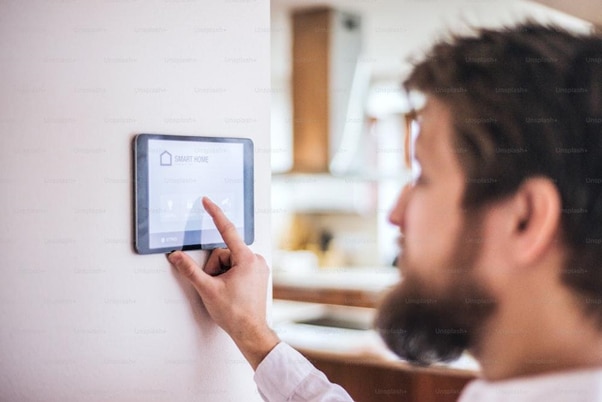
Home Security Trends for 2026 and Beyond

In 2026, the biggest developments in home security are centred around artificial intelligence, smart cameras, video doorbells, connected alarms, remote monitoring, stronger cybersecurity and integrated security systems. The future is not necessarily about replacing traditional security equipment, but about making different layers of protection work together more effectively.
For homeowners in London, Greater London and the Home Counties, understanding these developments can help when deciding whether to upgrade an existing alarm or CCTV system or install a new security solution.
1. AI-Powered Home Security Cameras
Artificial intelligence is becoming one of the most significant developments in domestic CCTV.
Modern cameras can analyse movement and distinguish between different types of activity. Instead of sending an alert every time something moves, AI-based detection can identify people, vehicles and other objects, helping to reduce unnecessary notifications.
Some newer systems also offer features such as:
- Person and vehicle detection
- Intrusion-zone monitoring
- Line-crossing detection
- Loitering detection
- Automatic tracking
- Smart event notifications
- Improved night-time detection
- Intelligent video search
Current security cameras are also moving towards higher resolutions and wider coverage. Recent 2026 products demonstrate the continued shift towards 2K, 4K and higher-resolution surveillance combined with AI detection and tracking.
However, AI should be treated as an additional security layer rather than a replacement for professional security design. AI detection can still make mistakes because of lighting, camera positioning and environmental conditions. Human verification remains important when responding to security alerts.
2. Video Doorbells Become Part of the Security System
Video doorbells have evolved from simple visitor cameras into increasingly capable security devices.
A modern video doorbell can allow homeowners to:
- See who is at the door
- Speak to visitors remotely
- Receive movement notifications
- Record activity around the entrance
- Monitor deliveries
- Detect people and other activity
- Integrate with other smart security equipment
The important trend for 2026 and beyond is integration. Rather than operating independently, a video doorbell can form part of a wider security system, potentially working alongside CCTV cameras, lighting and alarms.
For example, suspicious activity detected near a front entrance could trigger recording on several cameras while simultaneously sending an alert to the homeowner.
3. Smart Alarms and Remote Control
Traditional burglar alarms are also becoming more connected.
Modern alarm systems can provide smartphone notifications, remote arm/disarm functionality and information about system status. This allows homeowners to remain connected to their property even when they are away.
Remote access can be particularly useful for:
- Checking whether an alarm is armed
- Receiving alarm notifications
- Managing users
- Checking system status
- Controlling selected security functions
- Giving temporary access to trusted people
The growth of professional home security monitoring in the UK also highlights the increasing demand for connected protection. Omdia reported that UK households using professional home security monitoring were expected to reach 542,600 in 2025, representing 31% year-on-year growth.
4. Greater Integration Between Alarms, CCTV and Access Control
One of the most important trends is the move away from isolated security products.
A property may have an alarm system, CCTV cameras, a video doorbell, security lighting and smart locks, but these systems provide greater value when they can operate as part of a coordinated security strategy.
For example:
Door contact detects opening → alarm system identifies the event → CCTV camera records the area → homeowner receives an alert.
This type of integration provides more useful information than a single device operating independently.
For homeowners considering an upgrade, this means it is worth thinking about the complete security system rather than simply purchasing the latest camera or alarm.
5. Smart Locks and Connected Access
Smart locks and connected access systems are another area likely to expand over the coming years.
Depending on the system, homeowners may be able to use smartphones, PIN codes, access cards or other credentials instead of relying solely on traditional keys.
Smart access can also make it easier to manage who can enter a property. Temporary access can potentially be provided to family members, contractors or other trusted individuals without issuing a permanent key.
However, convenience should not come at the expense of security. A connected lock needs appropriate authentication, software updates and a reliable backup method in case of power or connectivity problems.
6. Cybersecurity Becomes a Home Security Priority
As more security equipment connects to the internet, cybersecurity becomes an increasingly important part of physical security.
A CCTV camera or smart alarm is not only a piece of hardware; it can also be a network-connected device handling potentially sensitive information.
The UK’s Information Commissioner’s Office published updated consumer IoT guidance in 2026, highlighting areas including informed consent, transparency, encryption, regular security updates and multifactor authentication. The guidance specifically covers connected products such as smart doorbells and home hubs.
Homeowners should therefore consider:
- Strong, unique passwords
- Two-factor or multifactor authentication where available
- Regular firmware updates
- Secure Wi-Fi networks
- Appropriate user permissions
- Reliable manufacturers and installers
- How and where CCTV footage is stored
- How long recordings are retained
Security technology needs to protect the home without creating unnecessary digital vulnerabilities.
7. Local Storage and Cloud Storage Will Coexist
Cloud recording has made remote access convenient, but not every homeowner wants to depend entirely on a subscription service.
This is driving continued interest in systems offering local storage through DVRs, NVRs, memory cards or dedicated home storage devices.
The choice between local and cloud storage depends on factors such as:
- Required recording duration
- Internet reliability
- Number of cameras
- Resolution
- Privacy preferences
- Remote viewing requirements
- Subscription costs
For many properties, a hybrid approach can provide a useful balance between local recording and remote access.
8. Solar-Powered and Battery Security Devices
Power requirements are another area of development.
Battery-powered cameras and video doorbells can make installation easier where running cables is difficult. Solar-powered cameras are also becoming more practical for suitable outdoor locations.
Recent 2026 security products demonstrate growing interest in solar-powered surveillance, battery operation and wireless connectivity.
However, wireless does not automatically mean maintenance-free. Battery condition, signal strength, weather exposure, charging and camera positioning still need to be considered.
For permanent home security, professionally installed wired equipment may remain the better option in many situations.
9. Security Systems Will Become More Proactive
Traditional security systems generally respond when an event occurs.
The next generation of systems is increasingly focused on proactive detection.
Instead of simply recording an incident, intelligent systems can identify unusual activity and notify the homeowner before a conventional alarm event occurs.
Examples could include:
- Someone repeatedly entering a restricted area
- A person remaining near an entrance
- A vehicle entering a defined zone
- Movement detected at unusual times
- Repeated activity around vulnerable areas
This does not mean homeowners should rely entirely on automated decision-making. Instead, intelligent detection can help people identify potentially important events more quickly.
10. Privacy Will Become Increasingly Important
More cameras and connected devices also mean more personal data.
Homeowners need to think carefully about camera positioning, particularly where cameras could capture neighbouring properties, public areas or people who do not need to be recorded.
Privacy controls, recording zones, audio settings and retention periods should be reviewed as part of the installation process.
This is especially relevant as AI-powered cameras become more capable of analysing video. The more information a system can identify and process, the more important responsible configuration becomes.
11. Traditional Security Measures Will Still Matter
Despite the rapid development of smart technology, some of the most effective security measures remain relatively simple.
Strong doors, quality locks, secure windows, appropriate external lighting and visible security equipment continue to form the foundation of residential protection.
A smart camera cannot compensate for a poorly secured door.
The most effective approach is therefore layered security:
Physical security + burglar alarm + CCTV + access control + security lighting + remote alerts or monitoring.
Each layer addresses a different part of the security problem.
What Will Home Security Look Like Beyond 2026?
Looking further ahead, home security is likely to become increasingly automated and interconnected.
Artificial intelligence will continue improving video analysis, while smart devices will communicate more effectively with one another. Homeowners may increasingly manage alarms, cameras, locks, lighting and other security functions through a single platform.
At the same time, cybersecurity, privacy and system reliability will become just as important as camera resolution or the number of features available.
The UK’s 2026 IoT guidance already emphasises that security should be treated as an ongoing responsibility throughout a connected product’s lifetime, rather than something considered only when a device is first installed.
Choosing the Right Home Security System
The latest technology is not necessarily the right technology for every property.
Before upgrading your home security system, consider:
- Which areas need protection?
Identify front and rear doors, windows, garages, driveways, side access and other vulnerable points. - Do you need an alarm, CCTV or both?
An alarm can provide immediate intrusion detection, while CCTV provides visual verification and evidence. - Is wireless or wired equipment more appropriate?
The property layout, construction and availability of power and network connections should influence this decision. - How will the system be maintained?
Batteries, cameras, recording equipment, detectors and connections should be checked periodically. - What happens if the internet goes down?
A well-designed system should have appropriate local functionality and backup arrangements. - How will your data be protected?
Check storage arrangements, user permissions, authentication and software support.
Conclusion
Home security in 2026 is becoming smarter, more connected and increasingly responsive. AI-powered cameras, video doorbells, smart alarms, remote monitoring, connected access control and intelligent notifications are changing how homeowners protect their properties.
But technology alone is not the answer.
The strongest approach is to combine modern technology with proven physical security measures and professional installation and maintenance. For homeowners in London, Greater London and the Home Counties, a properly designed system can provide multiple layers of protection while making it easier to monitor and manage security remotely.
As we move beyond 2026, the focus will increasingly shift from individual security devices to integrated, intelligent and secure home protection systems.
If your existing burglar alarm or CCTV system is becoming outdated, professional servicing, maintenance or an upgrade can help ensure that your security equipment continues to perform reliably as technology evolves.