




Signs Your Home CCTV System Needs an Upgrade in 2026
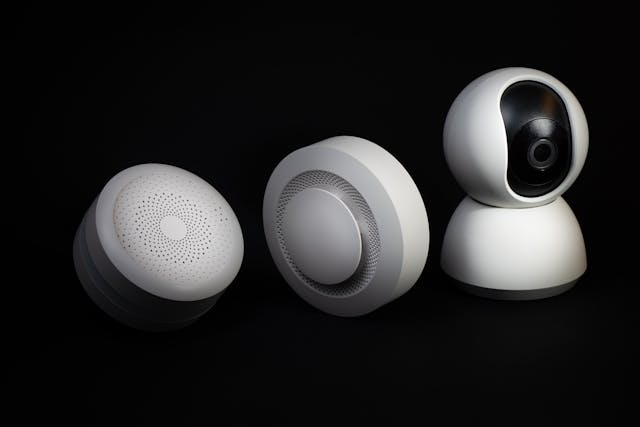 CCTV has changed significantly over the past few years. A camera system that was considered advanced when it was installed may now offer limited image quality, poor night-time performance, outdated recording technology or little protection beyond basic video capture.
For homeowners in London and the Home Counties, this is particularly relevant. Properties vary from terraced houses and flats to detached homes, large gardens, garages and properties with multiple access points. A CCTV system needs to be designed around the property, rather than simply adding cameras wherever they are convenient to install.
Modern CCTV can do considerably more than record video. Depending on the system, today’s cameras can provide high-resolution images, intelligent detection, colour night vision, remote smartphone viewing, secure recording and integration with other home security equipment.
So, how do you know when your existing CCTV system has reached the point where an upgrade makes sense?
1. Your CCTV Footage Is No Longer Clear Enough
One of the most obvious reasons to upgrade is poor image quality.
Older CCTV systems may use low-resolution analogue cameras that produce acceptable images during the day but struggle to capture useful detail when you actually need it. Faces, vehicle number plates and other important details can become difficult to identify, particularly when the subject is some distance from the camera.
Modern CCTV systems can provide significantly higher resolutions, including 4K cameras and other high-definition options. However, simply choosing the camera with the highest megapixel specification is not enough.
The positioning of the camera, lens selection, lighting conditions, field of view, image processing and recording settings all affect the quality of the final footage.
For example, a wide-angle camera may cover a large garden but provide insufficient detail at the far end. A camera with a more appropriate lens may provide better identification in a particular area.
A professional CCTV survey should therefore consider where you need detail, not just how many cameras you want.
2. Night-Time Images Are Poor
A CCTV system needs to protect your property after dark as well as during daylight.
If your existing cameras produce very dark, grainy or washed-out images at night, your system may no longer be providing effective surveillance when your property is most vulnerable.
Traditional infrared CCTV remains widely used, but modern cameras can offer improved night-time performance through better infrared illumination, image processing and, on suitable models, full-colour night vision.
Colour night vision can potentially provide additional information that conventional black-and-white infrared footage cannot, although performance depends heavily on available lighting and the specific camera.
External lighting should also be considered as part of the overall CCTV design. A camera cannot compensate indefinitely for poor positioning or completely unsuitable lighting conditions.
3. Your CCTV Sends Too Many Unnecessary Notifications
Smart CCTV has moved beyond simple motion detection.
Older systems may send an alert whenever anything moves in front of a camera. In a typical London garden or driveway, that could mean notifications caused by cats, birds, trees moving in the wind, passing vehicles or changes in lighting.
Modern CCTV systems can incorporate AI-assisted video analytics designed to distinguish between different types of activity. Depending on the equipment, this can include detection of people and vehicles, line crossing, intrusion zones and other events.
This can make notifications much more useful.
Instead of receiving constant alerts whenever there is movement, the system can be configured to focus on activity that is more relevant to your security requirements.
AI and video analytics are becoming increasingly important across the wider CCTV industry, although they should be implemented carefully and appropriately. The ICO notes that CCTV is evolving into increasingly sophisticated AI-based surveillance, bringing additional considerations around personal data and privacy.
4. You Cannot View Your Cameras When You Are Away
A CCTV system that can only be viewed from a monitor inside your home can be limiting.
Remote viewing has become an important feature of modern residential CCTV. With a suitable network-connected system, homeowners can view live cameras and, depending on the equipment, review recorded footage using a smartphone, tablet or computer.
This can be useful when you are:
- At work
- On holiday
- Away for the weekend
- Checking on a property remotely
- Waiting for a delivery
- Checking activity around a driveway or entrance
Remote access should, however, be configured securely. Your CCTV recorder and network should be protected with strong credentials, appropriate software updates and sensible access controls.
A CCTV system connected to the internet is part of your digital environment, so cybersecurity should be considered alongside physical security.
5. Your Recorder or Hard Drive Is Outdated
The cameras are only one part of a CCTV system.
The recorder determines how footage is stored, how long recordings are retained and what resolution and features are available. Older DVRs and NVRs may limit the capabilities of newer cameras.
You may also experience problems such as:
- Recording failures
- Hard-drive errors
- Insufficient storage
- Short recording retention
- Difficulty searching footage
- Poor remote access
- Incompatibility with newer cameras
Modern NVRs can support higher-resolution cameras, more efficient video compression and improved search functions. Some systems can also use event-based recording to make finding relevant footage considerably easier.
Before upgrading only the cameras, it is worth checking whether the existing recorder can actually support the features you want.
6. Your CCTV Does Not Cover the Important Areas of Your Property
CCTV installations can become outdated even when the equipment itself still works.
Your property may have changed since the original installation. Perhaps you have installed a new gate, built an extension, changed your driveway, added a garden office or altered the layout of your property.
Alternatively, you may simply have discovered that the original cameras do not provide adequate coverage.
A CCTV assessment should consider areas such as:
- Front door
- Rear doors
- Driveway
- Side access
- Garage
- Garden
- Patio
- Gates
- Outbuildings
- Vulnerable ground-floor windows
The objective should not be to install cameras everywhere. It is to create useful coverage of the areas that matter.
7. Your Cameras Are Constantly Affected by Glare, Shadows or Backlighting
Poor image quality is not always caused by an old camera.
A camera facing directly towards the sun, a bright security light or a reflective surface can produce difficult footage even with relatively modern equipment.
Older cameras may also have limited capabilities when dealing with strong contrasts between bright and dark areas.
Modern cameras can include technologies designed to improve challenging lighting conditions, such as wide dynamic range and improved image processing.
If your cameras produce excellent images at certain times of day but unusable footage at others, repositioning or upgrading the camera may make a significant difference.
8. Your CCTV and Alarm System Work Independently
Home security is increasingly moving towards integrated systems.
Your CCTV does not necessarily need to operate independently from your burglar alarm, door entry system or other security equipment.
A modern installation may allow different security technologies to work together. For example, an alarm event can be associated with CCTV footage, while cameras can provide visual information about an event occurring around the property.
This can be particularly useful when you receive an alarm notification while away from home.
Rather than simply knowing that an alarm has activated, CCTV can potentially help you establish what is happening.
9. Your System Relies Entirely on Wi-Fi
Wireless CCTV can be convenient, but homeowners should understand the difference between wireless connectivity and a completely wireless camera.
Many professional CCTV systems use network connectivity while still requiring power to the camera. Depending on the property and system design, wired network infrastructure such as Ethernet and PoE can provide a more consistent connection.
For some homes, Wi-Fi cameras may be perfectly suitable. For others, particularly larger properties or installations requiring dependable continuous recording, a properly installed wired IP CCTV system may be preferable.
The best solution depends on the property, network infrastructure and required reliability.
10. Your CCTV System Has Not Been Reviewed for Privacy and Data Protection
This is increasingly important for UK homeowners.
If your cameras only monitor the inside of your own property, the situation may be relatively straightforward. However, if cameras capture areas outside your property boundary — such as pavements, roads or neighbouring properties — data protection considerations may apply.
The UK Government’s domestic CCTV guidance was updated on 21 May 2026 and specifically covers CCTV and video surveillance technology used around homes, including video doorbells.
The ICO also provides guidance concerning CCTV and video surveillance, including the growing use of smart cameras and AI-based surveillance.
When upgrading a CCTV system, camera positioning should therefore be considered carefully. The goal is to protect your property without unnecessarily capturing areas belonging to other people.
11. Your CCTV Equipment Is Difficult to Maintain
Older CCTV systems can become increasingly difficult to maintain as equipment ages.
Replacement cameras may be difficult to source, older recorders may no longer support current technology, and certain components may become unreliable.
Regular CCTV servicing can identify issues before they result in lost footage. A professional service can include checking cameras, connections, power supplies, recording equipment, hard drives, image quality, time and date settings and the general condition of the installation.
For some homeowners, upgrading selected components may be enough. For others, replacing the complete system may be more economical over the longer term.
Should You Upgrade Your CCTV or Replace It?
An upgrade does not necessarily mean replacing every camera.
Depending on the installation, it may be possible to retain existing cabling while replacing the cameras and recorder. In other situations, the existing infrastructure may be too old or unsuitable for modern IP CCTV.
Before investing in new equipment, consider:
- Camera resolution
- Lens and viewing angle
- Night-time performance
- Storage capacity
- Recording retention
- AI detection features
- Remote access
- Network security
- Lighting
- Camera positioning
- Future expansion
- Integration with your alarm system
A professional CCTV installer can assess the existing system and determine whether upgrading individual components or installing a completely new system is the better option.
CCTV in London Is Becoming More Advanced — But Installation Still Matters
The CCTV market has moved towards smarter cameras, networked systems and increasingly sophisticated video analytics. London itself is also seeing significant investment in advanced CCTV infrastructure, with more than 300 cameras upgraded or installed through a City Hall-funded programme announced in 2024.
At the same time, the Metropolitan Police has announced plans for increased use of AI-assisted video analysis and static live facial recognition in parts of London.
Residential CCTV does not need to replicate public-space surveillance technology. For most homeowners, a well-designed system with high-quality cameras, reliable recording, useful night vision, sensible detection and secure remote access will provide a much more practical solution.
The important point is that CCTV technology should be selected according to the property and the security objective, rather than choosing equipment simply because it has the highest specification.
Final Thoughts
If your home CCTV system is several years old, this does not automatically mean it needs replacing. However, if your cameras produce poor images, struggle at night, miss important areas, generate excessive notifications, have unreliable recording or cannot provide secure remote access, it is worth having the system assessed.
Modern CCTV can provide much more than basic recording. With high-resolution imaging, improved night vision, intelligent detection, network connectivity, remote viewing and integration with other security systems, a properly designed installation can provide a considerably more useful layer of protection for a London home.
For homeowners across London and the Home Counties, regular CCTV servicing and periodic system reviews can help ensure that your security equipment continues to meet the needs of your property.
If your existing CCTV is outdated or you are considering a new installation, Eagle Security Solutions can assess your current system and advise on suitable CCTV installation, upgrading and maintenance options for your home.